
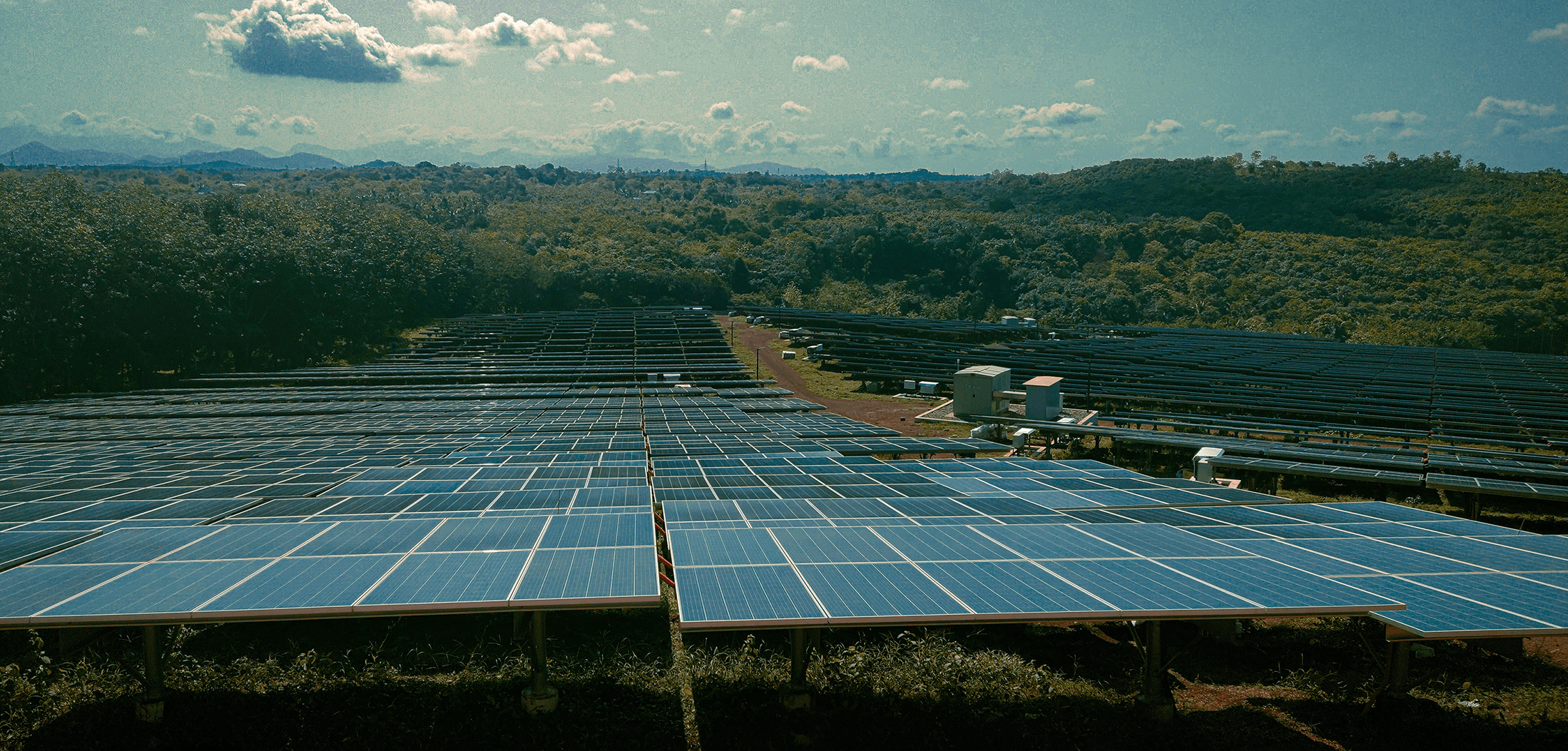
Photo by: Harisankar
Those Who Claim to Care About the Environment Are Killing It With Their Pseudo-Science
Isn’t the purpose of preserving our environment to sustain life, all life at its highest potential? Simple enough. “Follow the science,” we’re told. But too often what’s being sold as science is a selective, confirmation-biased story that skips critical steps: full lifecycle accounting, site-specific ecology, and honest engagement with trade-offs. When policies are pushed on slogans instead of comprehensive evidence, the result can be environmental harm wrapped in a green ribbon.
Take large, ground-mounted solar in New York State. On paper it sounds elegant: capture sunlight, make electricity, lower emissions. But New York is not Arizona. We are famous for many things like our universities, finance, forests, lakes, and snow. But the one thing we are not known for is immense, year-round sunshine. Our insolation is modest, our seasons long, our landscapes complex. When you clear hundreds or thousands of acres here for utility-scale arrays, the “return on disturbance” is fundamentally different than it would be in high-desert sun belts. You’re trading away habitat, soils, hydrology, and viewsheds for fewer kilowatt-hours per acre than those glossy brochures imply.
Visit the InformedNY Round Table
for discussions on Environmental Issues
https://www.facebook.com/groups/informednyroundtable
#HealthINY #FollowTheMoneyINY #EnvironmentINY- #LegislationINY –
[restrict userlevel="subscriber"]
And let’s take a look at the lifecycle of solar which begins with mining . . . you know the thing liberals say is bad for our environment but I guess in this case it’s good? And then it moves onto high-heat manufacturing (silicon purification and wafering) which require a lot of hazardous byproducts. Then there is the demand on roads, fencing, and the need for transformers. And then when everything is ready to be placed on the ground many times the funding is not there and the people in charge of these solar objects must dispose of the metals, glass and polymers.
There’s the land itself: fields that once supported ground-nesting birds, hunting raptors, pollinators, and native flora get scraped, graded, gravelled, and fenced. Drainage patterns change. Edge effects multiply. “Pollinator-friendly” seed mixes can help in theory, but only if they’re actually required, successfully established, and maintained and even then, a fenced industrial array is not the same as intact grassland or meadow. The disruption falls heaviest on species that need big, open, contiguous space. In New York, one of the most vulnerable is the Short-eared Owl, endangered at the state level, along with the Northern Harrier and several grassland songbirds that have been in long decline. And have any of you noticed that the monarch butterfly? A report from the agrivoltaics / solar-habitat literature notes: “The iconic monarch butterfly … habitat loss reduces the butterflies’ resilience to other stressors … Development of large utility-scale solar … is transforming landscapes in some parts of the country.” When land is cleared (trees removed, grading done, fences erected), even if panels aren’t yet installed, the ecological function of that land for butterflies (and other pollinators) can be diminished. Monarchs move through landscapes and rely on way-stations of nectar plants. If large tracts of land on or along migratory routes are converted to solar arrays without appropriate plantings, that could reduce nectar availability.
Economically and socially, communities feel the mismatch. People who live beside proposed arrays worry about heavy construction traffic, storm-water runoff onto neighboring properties, inverter noise, glare, and the way a formerly open landscape turns into a fenced industrial site. Property values are a lightning rod in public meetings for good reason: for many families, their home is their largest asset, and the visual and amenity changes are real. Proponents often dismiss these concerns as NIMBYism; but asking for responsible siting, full mitigation, and honest modeling tailored to New York’s sunlight is not anti-environment, it is environmentalism.
Even the engineering realities are more complicated than advocates admit. Panels degrade a little every year. Output suffers from soiling (dust, pollen, leaf litter, snow) and shading. In a climate like New York’s which is cloudier, wetter, leafier those small percentages add up. Taken with lower baseline sun, the energy yield per acre declines faster than the PowerPoint promised, while the ecological cost per acre remains what it was the day the bulldozers arrived.
None of this is an argument to abandon clean energy; it’s a demand for honest accounting and smarter choices. Put solar on rooftops, on parking lots as canopies, on brownfields and previously disturbed sites. Require rigorous wildlife surveys up front. Avoid core grasslands and wetland complexes. Tie permits to funded decommissioning and proven recycling. Build smaller and distributed where the land is already paved, rather than sprawling where the land is still alive.
Examples of Where Solar in NYS Is Killing
Fort Edward & Argyle (Washington County): A multi-hundred-acre proposal sits inside the Washington County Grasslands complex. This area is critical wintering habitat for Short-eared Owls and Northern Harriers. Locals and conservation groups warn that raptors that hunt low over open fields cannot “swoop” under panel rows to catch prey; fencing and posts fracture the very openness these species require.
Washington County Grasslands IBA (regional pattern): This Important Bird Area supports many of New York’s most imperiled grassland birds. As utility-scale arrays target flat, inexpensive fields, cumulative habitat loss fragments one of the last strongholds for wintering owls and harriers in the state.
Flint Mine Solar (Greene & Columbia Counties): The state’s own siting record acknowledged listed raptors in and around the project area, requiring a Net Conservation Benefit Plan, a bureaucratic way of saying the site overlaps wildlife needs that shouldn’t be shrugged off.
Two Rivers Solar (St. Lawrence County): Regulators identified overlap with occupied owl/harrier habitat and required mitigation, effectively confirming that the chosen acreage isn’t ecological “blank space.”
Riverside Solar (Jefferson County): Mandatory wintering-raptor surveys and conditions were imposed because the site holds potential habitat for Short-eared Owl, Northern Harrier, and sensitive grassland songbirds.
Somerset Solar (Niagara County): Survey protocols documented Short-eared Owls during the winter season; the file reads like so many others, evidence of use by listed species, followed by attempts to paper over the conflict with mitigation.
Alfred Oaks, Hemlock Ridge, Brookside, Richland III (Western & Central NY): Across multiple dockets, the same story repeats: state-required raptor and grassland-bird surveys, findings of habitat use or potential use, and then conditions that admit impact while pressing forward on timelines driven by procurement goals, not ecology.
New York can do better.
If environmentalism means anything, it means protecting the living, local, irreplaceable places that make New York, New York. It starts with telling the whole truth, not the brochure version. It starts with saying no to pseudo-science, and yes to a conservation ethic that puts habitat first.
[/restrict]
Staff Picks

NYS shift away from Natural gas
New York’s Shift from Natural Gas: A Case for a...
Syracuse, a $16 million budget shortfall
Photo by John Marino from Pittsburgh -...

Foreign Holdings in U.S. National Debt
Foreign Holdings in U.S. National Debt The $37...
Don’t underestimate local power.
A small town in Wisconsin just made Microsoft back off a 244-acre data-center project! Because the local community refused to stay silent people are waking up to what these facilities mean for water, power, farmland, health, and for life to continue.